
Four weeks before: settle the shape of the party
Start with the decisions that other work depends on: date, location, format, approximate guest count, and spending limit. Check the people whose attendance is essential before treating the date as final. If you need a venue or specialist supplier, their availability may require starting much earlier than this example.
Choose a host and the people helping with planning. Give each person an area to own, such as food, guest communication, or setup. “Everyone will help” leaves a lot of hidden work with the host; a named owner makes the next step clear.
Use the party budget worksheet before booking or ordering. Record which choices are confirmed and which are still options.
Three weeks before: invite and resolve the blocking choices
Send invitations once the core details are stable. Include the date, arrival time, location, reply method, and response deadline. Work backward from any supplier or reservation deadline when choosing when you need replies.
Keep the menu and activity options short enough to compare. Ask cohosts for preferences, then name the person making the final call and when they will make it. A choice that affects shopping, space, or guest instructions should not stay open indefinitely.
The invitation wording examples include a home dinner, a restaurant celebration, a potluck, and a follow-up message.
Two weeks before: turn decisions into owned tasks
Confirm the menu, cake arrangement, seating, and any orders. List what must be collected, delivered, borrowed, or returned. Add a deadline and a handoff to each task.
For example, “Alex buys candles” is less useful than “Alex brings the candles to the house by 3 p.m. Saturday so Riley can finish the table.” That handoff tells both people what happens next.
Review access and dietary arrangements directly with the people concerned. Confirm what your group can provide rather than assuming a general message covers everyone’s needs.
One week before: confirm the count and simplify
Follow up with people who have not replied. Adjust the shopping list and layout to the current count, then share a short update with cohosts: what is settled, what changed, and what still needs an owner.
Check practical constraints such as available fridge space, serving dishes, travel time for collections, and the weather backup for an outdoor plan. If the schedule already looks crowded, remove an optional activity now. Keep essential arrival and meal details easy to find.
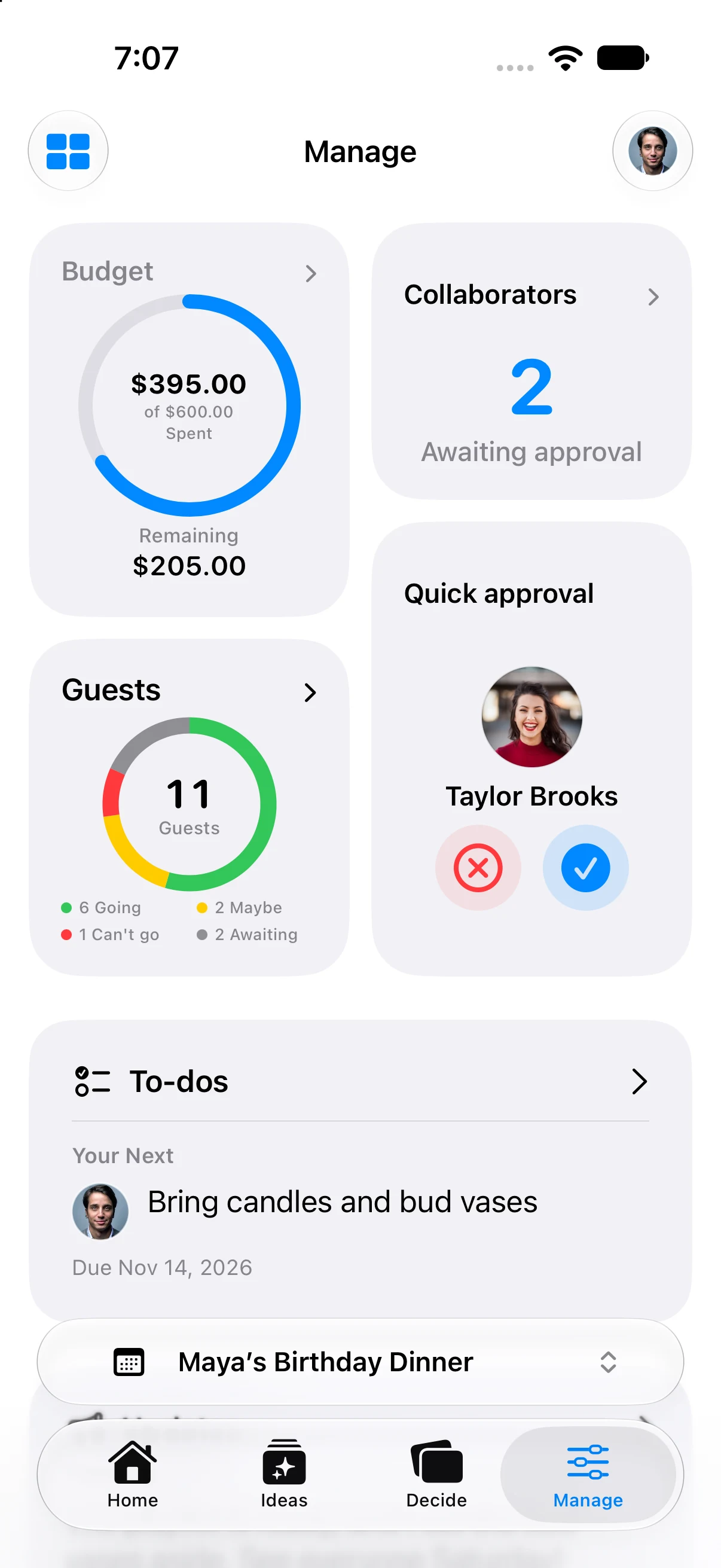
Native app capture using fictional birthday dinner data. Review actual task owners and responses for your event.
Gatherory’s Manage view brings the budget, guest responses, approvals, and next task into the event view. Use that overview to spot unresolved work, then confirm the handoff with the person doing it.
The day before: make one short host plan
Finish tasks that do not depend on the final hours: clear space, check supplies, confirm collections, and prepare the guest note. Put the address, entrance information, and host contact in that note. Keep private purchases and setup instructions in the cohost plan.
The dinner party checklist can help turn the meal into a manageable preparation sequence.
Example event-day schedule for a 6 p.m. dinner
This is an illustrative run of the evening, not cooking or food-storage guidance. Replace preparation times with the instructions for your menu and suppliers.
| Time | What happens | Owner and handoff |
|---|---|---|
| 2:00 p.m. | Check the room, supplies, and confirmed guest count | Alex flags anything missing to Jordan |
| 3:00 p.m. | Bring borrowed seating and table decorations | Riley hands the setup materials to Alex |
| 4:00 p.m. | Collect the prearranged cake and any final supplies | Jordan confirms collection and arrival |
| 5:00 p.m. | Finish the room and review the serving plan | Alex checks that each helper knows their job |
| 5:30 p.m. | Pause setup; keep a buffer for unfinished essentials | Cohosts drop optional decor if needed |
| 6:00 p.m. | Welcome guests | Riley handles the door while Alex hosts |
| 6:30 p.m. | Start the meal when the group is ready | Alex checks with the meal helper |
| Around 8:00 p.m. | Bring out the cake | Jordan coordinates with the host |
| After the meal | Clear serving space and pack borrowed items | Cohosts use the agreed cleanup roles |
Keep a fallback small enough to use
Pick a response to the two or three most likely disruptions. If someone is late, who welcomes them? If the outdoor table is unavailable, where does dinner move? If cake collection is delayed, who contacts the person collecting it?
Protect the main gathering and let optional details move. Send affected guests one clear update when the time or location changes. The Gatherory iPhone beta can keep the schedule, tasks, costs, and shared ideas with the event; sending practical guest instructions remains part of hosting.