
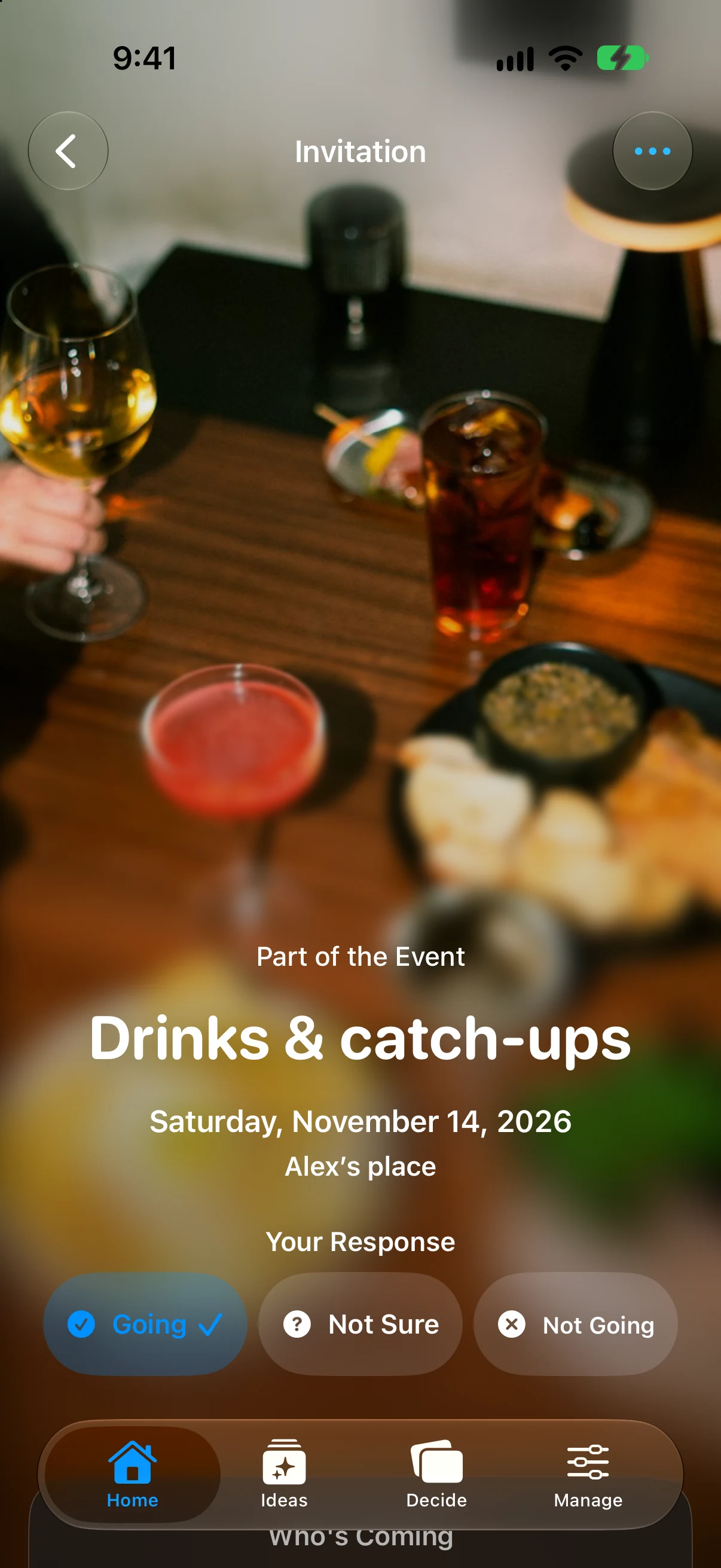
Start with a quick invitation checklist
Before sending, check that someone outside the planning conversation can answer these questions:
- What are we celebrating, and who is hosting?
- What is the date and arrival time? Is there an end time or an open arrival window?
- Where is it, and are there entrance or travel details to know?
- Who is included: the named guest, a partner, children, or another agreed group?
- Is there a contribution, ticket, meal cost, or item to bring?
- How should I reply, and when do you need to know?
- Who can I contact about access, dietary needs, or another question?
Use the examples below as drafts. Replace every bracketed field, confirm the details, and remove anything that does not apply. Share a private home’s address only with the intended guests through the channel you choose.
Birthday dinner invitation at home
Come celebrate [name]’s birthday with dinner at ours on [day, date]! Arrive from [time]; we’ll sit down around [time]. We’re at [address and entrance detail]. [Clarify who is invited.] Please let [host] know by [reply date] whether you can make it, using [reply method]. [Nothing to bring / agreed contribution]. Message me directly about any dietary or access needs. We’d love to see you.
Name the arrival time separately from the meal time if you are leaving room for conversation first. If the birthday person wants a small dinner, make the invitation’s scope clear rather than letting guests guess about plus-ones.
For host jobs and an evening plan, use the birthday dinner checklist.
Restaurant birthday invitation with shared costs
We’re getting together for [name]’s birthday at [restaurant and address] on [day, date] at [time]. [Explain the confirmed arrangement: everyone orders and pays for their own meal / agreed set menu and cost, including any confirmed extras]. Please reply to [host] by [date] so we can confirm the booking. [Clarify who the reservation includes.] If you need menu or access information before deciding, let me know and I’ll check with the restaurant.
Confirm the payment arrangement with the restaurant before putting it in the message. If a deposit is needed, explain who is collecting it, what the arrangement is, and when it is due. Avoid “just bring yourself” when guests are expected to cover a meal or another cost.
Potluck invitation with room for different contributions
Join us for a potluck on [date] from [arrival time] at [place]. We’re planning for about [number] people. Reply by [date] with whether you’re coming and what you’d like to bring. We’ll coordinate dishes so we don’t double up. Drinks, serving supplies, or help setting up are welcome too—tell us what suits you. [Host] will confirm the contributions and any arrival instructions before the day.
Ask before assigning a dish, and leave a way to attend without bringing food. When contributions are agreed, send one current list rather than making guests search an old chat. The potluck checklist includes a contribution table with serving and equipment notes.
A polite RSVP reminder
Hi [name], just checking whether you can join us for [occasion] on [date]. We’re confirming [the booking / food / seating] on [day], so a reply by [deadline] would help. It’s completely fine if you can’t make it—please let me know either way. Thanks!
Use the deadline that matters to the plan. For a guest who is unsure, agree when to check again and keep their response separate from confirmed attendance. Silence is an outstanding reply, not a yes.
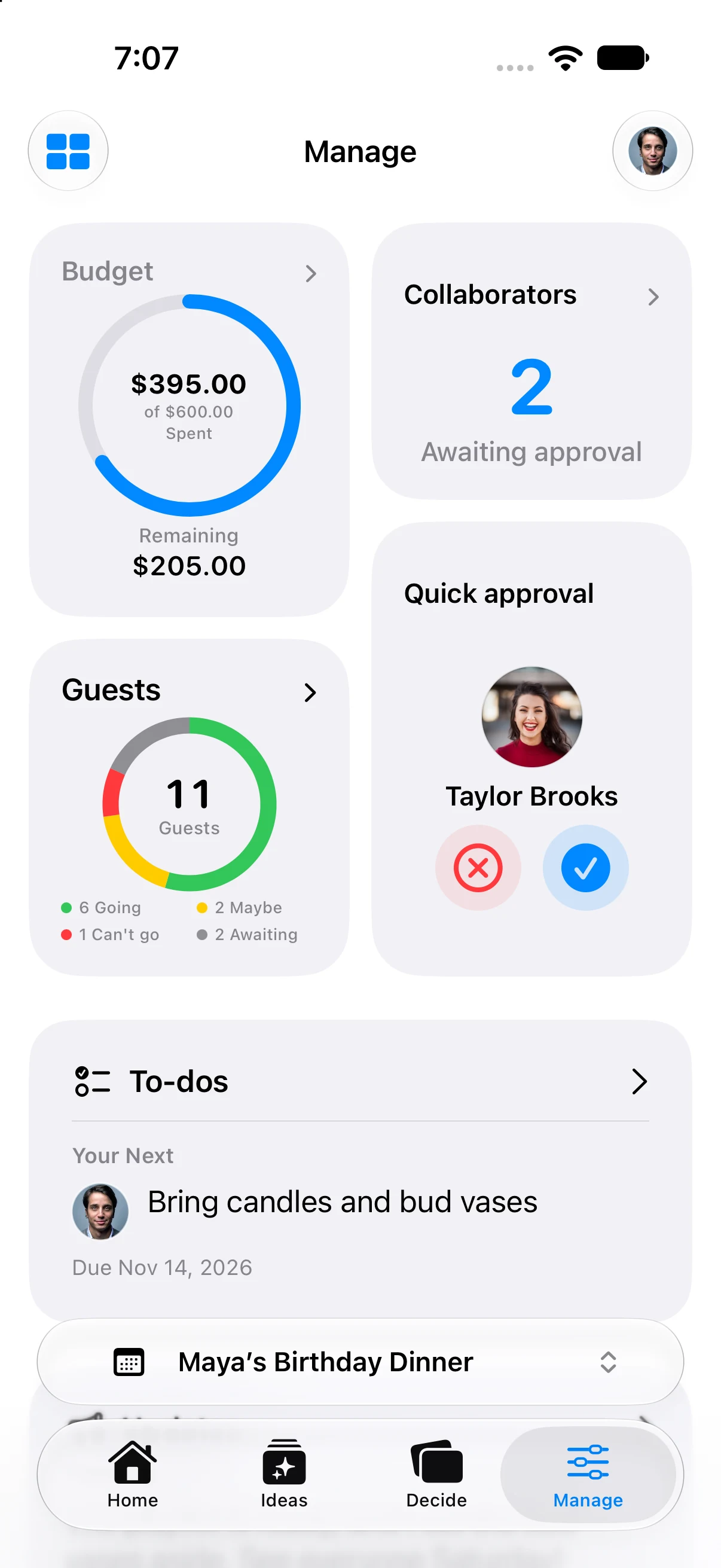
Fictional birthday dinner example. Attendance replies and planning permissions are separate parts of an event.
Send final details without repeating the whole invitation
Looking forward to [occasion] on [date]! Arrive from [time] at [address]. Use [entrance]; [parking or travel note]. [Agreed contribution or other practical detail]. If your plans change or you have trouble finding us, contact [host and chosen contact method]. See you soon!
Use a final note to confirm what is settled. If the location or time changed, state the change at the beginning instead of burying it in the message. Keep spending discussions, setup assignments, and unfinished choices with the cohosts.
Match the invitation to the access you want to share
In Gatherory, a guest invitation is for attending, while collaborator access brings someone into planning with the permissions you give them. Choose the appropriate event and invitation type before sharing; do not send a planning link merely because someone needs the address.
The invitation and access guide explains that distinction. The iPhone beta supports English and Spanish. You can also use all the wording above in a personal message or email, alongside your usual way of collecting replies.