
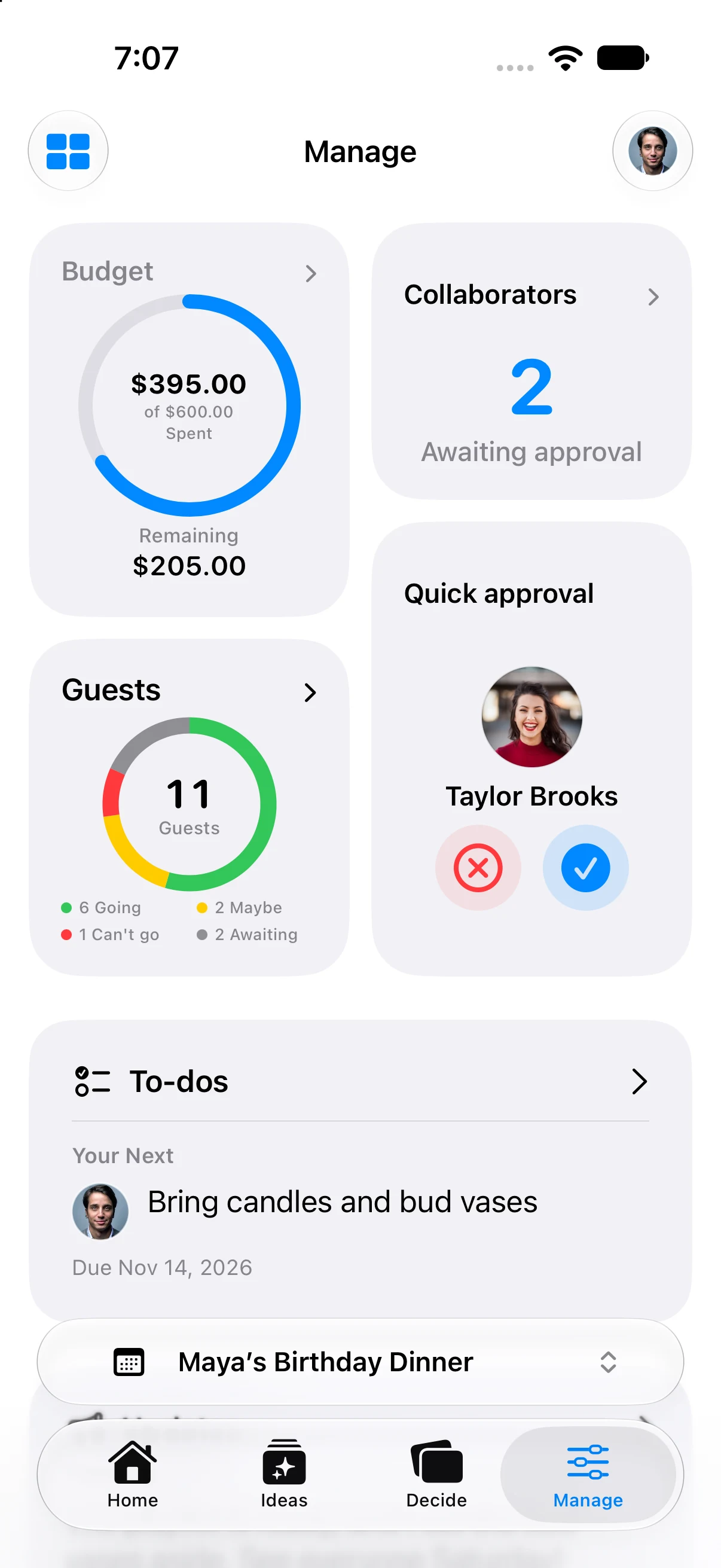
Agree on the limit with your cohosts
Write down the total amount available for the gathering, who is contributing, and whether anyone expects repayment. A host covering dinner and a group splitting supplies need different arrangements. Have that conversation before someone places an order.
Choose a guest-count assumption and a date to confirm it. If your initial plan is for ten people, mark it as ten rather than quietly letting a few extra invitations change the cost. A per-person figure can help compare plans, but it does not replace checking fixed costs such as a room booking or equipment hire.
Decide which choices matter most. If the birthday meal is the priority, keep room for it before choosing flowers, favors, or extra activities. A smaller set of clear priorities makes later tradeoffs easier.
Copy this party budget worksheet
Use one row for each purchase or booking. Add rows when different people are buying items in the same category. On a small screen, swipe the worksheet sideways to see all the columns.
| Item | Owner | Estimate | Committed total | Paid so far | Still due | Decision or payment date |
|---|---|---|---|---|---|---|
| Food or restaurant | [Name] | [Amount] | [Amount] | [Amount] | [Amount] | [Date] |
| Drinks and ice | [Name] | [Amount] | [Amount] | [Amount] | [Amount] | [Date] |
| Cake or dessert | [Name] | [Amount] | [Amount] | [Amount] | [Amount] | [Date] |
| Decorations | [Name] | [Amount] | [Amount] | [Amount] | [Amount] | [Date] |
| Serving supplies or hire | [Name] | [Amount] | [Amount] | [Amount] | [Amount] | [Date] |
| Other gathering costs | [Name] | [Amount] | [Amount] | [Amount] | [Amount] | [Date] |
An estimate is a working allowance. A committed total is an agreed order or booking, including the deposit and remaining balance. Paid so far is part of that committed amount, not an additional cost. For example, a $100 order with a $25 deposit has $75 still due; it is not a $125 order.
Keep uncertain options separate until you choose one. Two possible cake orders should not both look like confirmed spending.
Example: a $300 birthday dinner for ten
These are invented planning allowances for a dinner at home, not current prices or a promise that this amount will cover your gathering. Replace each allowance with your own quotes and shopping list.
| Category | Example allowance |
|---|---|
| Food | $150 |
| Drinks and ice | $40 |
| Cake | $35 |
| Table decorations | $20 |
| Serving supplies | $15 |
| Unassigned reserve | $40 |
| Total spending limit | $300 |
The planned purchases use $260, leaving $40 unassigned. Suppose the cake quote becomes $45. The cohosts can use $10 of the reserve, reduce another purchase, or agree on a different cake. Record the choice before ordering. Do not treat the reserve as a second budget on top of the $300 limit.
For the rest of the evening, pair this worksheet with the birthday dinner checklist.
Compare the idea and its whole cost
Before approving a purchase, check what comes with it. A decorated table might also need delivery, a vase, candles, or collection the next day. A restaurant plan may need a separate cake arrangement. Confirm any applicable fees and terms with the provider rather than guessing.
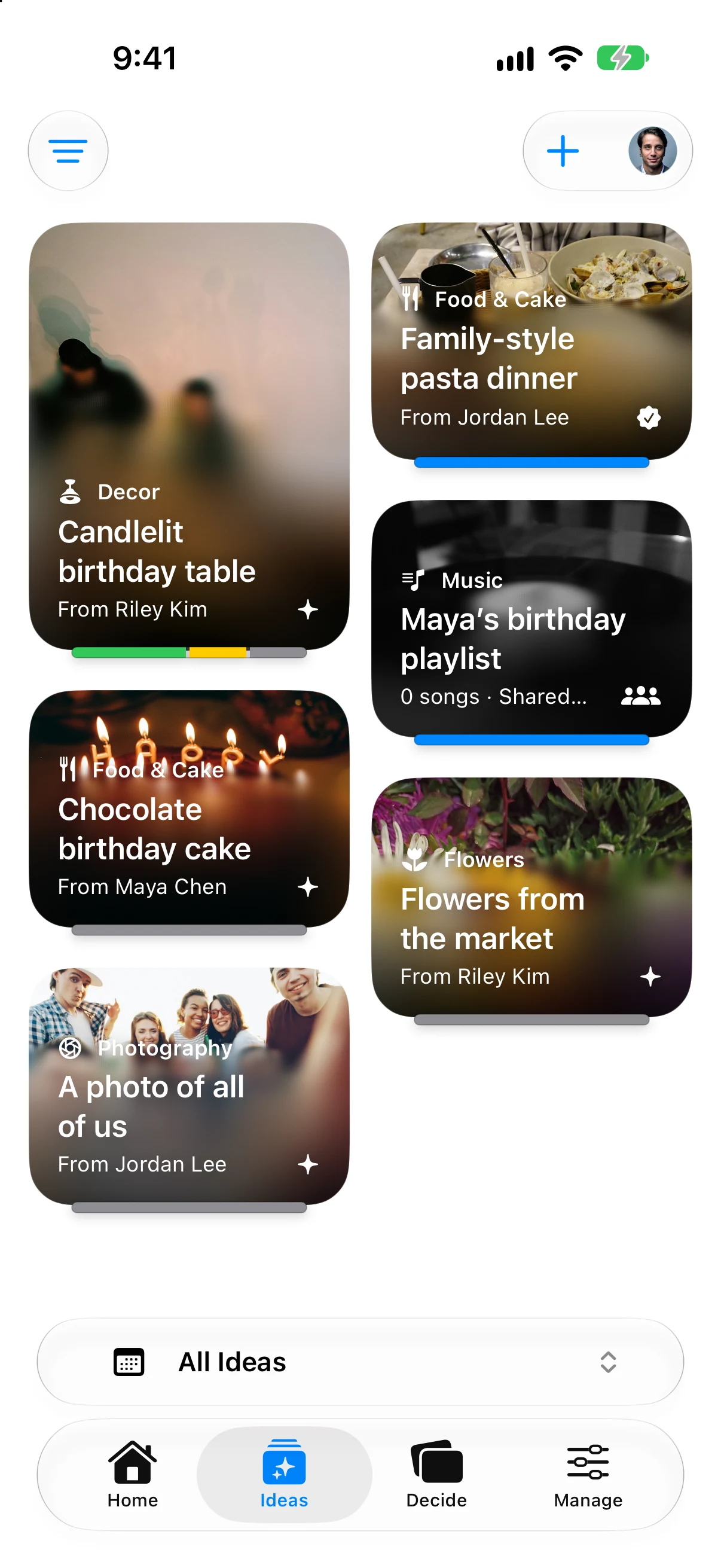
Fictional Maya’s Birthday Dinner example. Saving an idea or expressing a preference does not approve its purchase.
In Gatherory, the group can collect ideas and choose Pass, Maybe, or Love It before an authorized planner approves an idea separately. Keep the agreed spending decision clear even when an option is popular.
Make the buying handoff explicit
Give each purchase one owner and a limit. A short message is enough:
Jordan is ordering the cake by Thursday, up to [amount] including any confirmed extras. Please check with [host] before changing the order. We’ll settle shared purchases by [agreed method and date].
Check the worksheet after a booking, a guest-count change, or a major purchase. Keep receipts and payment arrangements wherever your group normally handles them; tracking event costs is separate from transferring money.
The Gatherory iPhone beta keeps costs and tasks with the event. You can also use this worksheet in a shared document. Assign the work with the cohost task guide, then put purchase deadlines into your party planning timeline.